
Design patterns II: interfaces and traits
Composition (last lecture) needed forwarding of all methods. Why so complicated? Wasn't the original inheritance tree structure better?
multiple inheritance:
you just compose two different "trees".
common example with ArmoredVehicle = Vehicle + Weapon
Do you think there is only one sensible inheritance tree?
Animal World
Think of an inheritance tree of a full scope Animal world.
Idea #1: Split animals by biological taxonomy 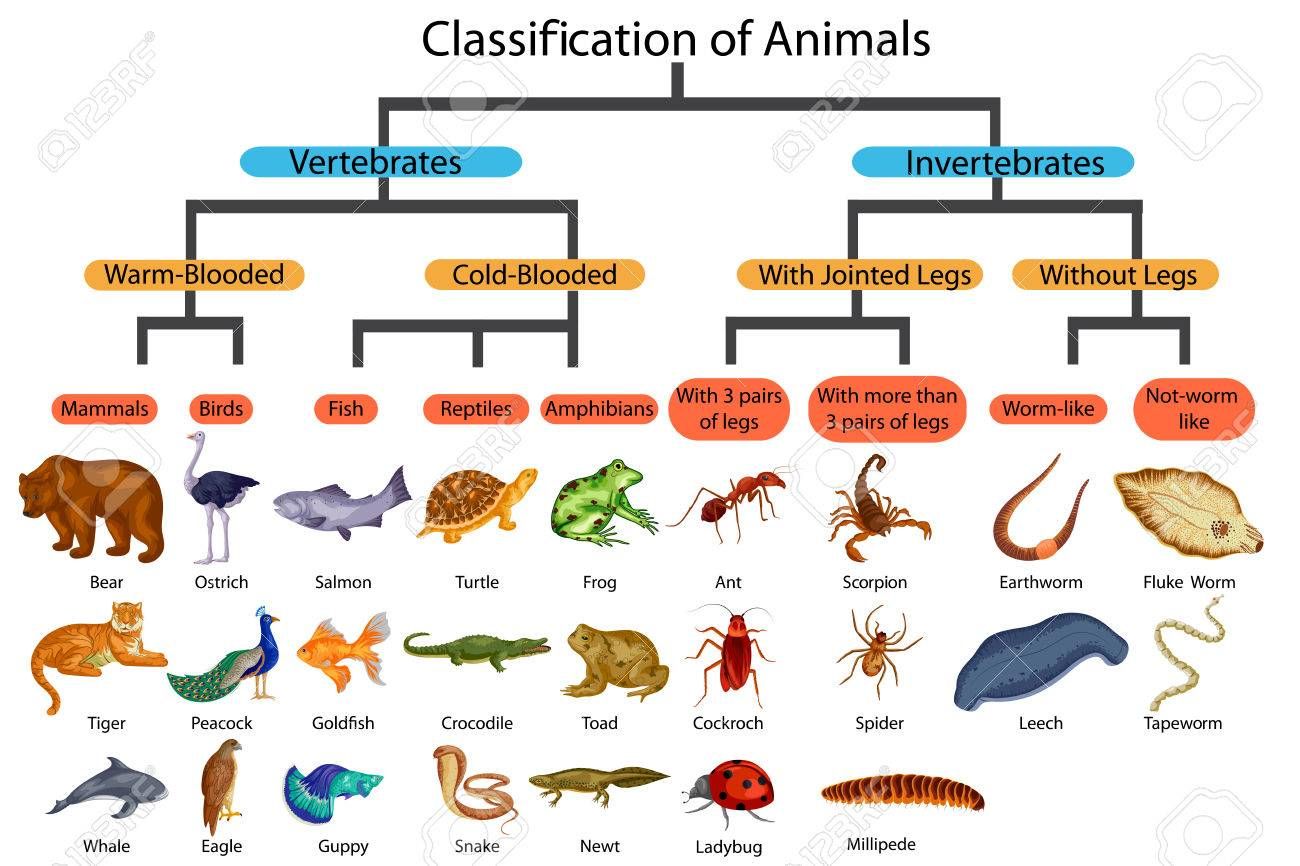
Hold on.
Sharks and dolphins can swim very well!
Both bats and birds fly similarly!
Idea #2: Split by the way they move!
Idea #3: Split by way of ...
In fact, we do not have a tree, but more like a matrix/tensor:
| swims | flies | walks | |
|---|---|---|---|
| birds | penguin | eagle | kiwi |
| mammal | dolphin | bat | sheep, wolf |
| insect | backswimmer | fly | beetle |
An abstract type of a tree dispatches a whole row, or a whole column, depending on which tree we choose:

A bat and an eagle both fly, but they do not share a parent type. How do we dispatch on can fly?
The answer is a trait: a property of a type that dispatch can read. Later we will see that Julia itself uses the same trick to organize interfaces.
Traits: cherry picking subtyping
Option 1: analyze what features of animals are common and compose the animal with type parameters (as Animal{Sheep} in lab 3):
abstract type HeatType end
abstract type MovementType end
abstract type ChildCare end

mutable struct Animal{H<:HeatType,M<:MovementType,C<:ChildCare}
    id::Int
    ...
end
Now, we can define methods dispatching on parameters of the main type.
all features have to be known when
Animalis defineda new feature changes the type, and all methods written for it
is movement a property of the individual or of the species?
Option 2: keep the biological tree and add the features later, as traits:
abstract type Animal end
abstract type Bird <: Animal end
abstract type Mammal <: Animal end
struct Eagle <: Bird end
struct Penguin <: Bird end
struct Bat <: Mammal end
struct Dolphin <: Mammal end
struct Sheep <: Mammal end
Trait mechanism in Julia is built using the existing tools: Type System and Multiple Dispatch.
Traits have a few key parts:
Trait types: the different traits a type can have.
Trait function: what traits a type has.
Trait dispatch: using the traits.
Add movement as a trait:
# trait types
abstract type Movement end
struct Flies <: Movement end
struct Swims <: Movement end
struct Walks <: Movement end

# trait function: input is a Type, output is an instance of a trait type
Movement(a::Animal) = Movement(typeof(a))
Movement(::Type{<:Animal}) = Walks()    # default
Movement(::Type{Eagle}) = Flies()
Movement(::Type{Bat}) = Flies()
Movement(::Type{Penguin}) = Swims()
Movement(::Type{Dolphin}) = Swims()

# trait dispatch
move(a::Animal) = move(Movement(a), a)
move(::Flies, a) = "flies"
move(::Swims, a) = "swims"
move(::Walks, a) = "walks"BatandEagleshare behavior without sharing a parent.The trait was added after the types were defined, without touching them.
Should there be a default? What happens without it?
Two traits at once, a second axis of the table:
abstract type Diet end
struct Carnivore <: Diet end
struct Herbivore <: Diet end

Diet(a::Animal) = Diet(typeof(a))
Diet(::Type{<:Animal}) = Herbivore()
Diet(::Type{Eagle}) = Carnivore()
Diet(::Type{Bat}) = Carnivore()
Diet(::Type{Dolphin}) = Carnivore()

hunts(a::Animal) = hunts(Movement(a), Diet(a))
hunts(::Flies, ::Carnivore) = "hunts from the air"
hunts(::Swims, ::Carnivore) = "hunts under water"
hunts(::Movement, ::Herbivore) = "grazes"
What happens with a walking carnivore? Is it a bug or a feature?
Can you do this with a single type hierarchy?
Traits are free
@code_llvm debuginfo=:none move(Bat())define nonnull ptr @julia_move_1323() {
top:
ret ptr @"jl_global#1325.jit"
}The trait function is evaluated at compile time.
Nothing is left at runtime, the function returns a constant.
Same as
fsumin lecture 1.
Compare with if a isa Eagle || a isa Bat ...: also fast, but who can extend it?
Interfaces: Julia uses the same trick
Traits are not a toy. The core library is built from them, mostly to organize interfaces.
Interfaces you already know
In the bachelor course, you implemented currencies:
Base.convert(::Type{T}, c::C) where {T<:Currency, C<:Currency} = T(c.value * rate(T, C))
Base.promote_rule(::Type{Euro}, ::Type{Dollar}) = Euro
and suddenly Euro(1) + Dollar(1) worked. Who wrote the +?
This is an interface: a contract between your type and generic code that you have not written.
no keyword, no inheritance
documented (in the manual), not checked by the compiler
Example: Iterators
Many fundamental objects can be iterated: Arrays, Tuples, Data collections...
They do not have any common "predecessor". They are almost "primitive" types.
they share just the property of being iterable
we do not want to modify them in any way
| Required methods | Brief description |
|---|---|
| iterate(iter) | Returns either a tuple of the first item and initial state or nothing if empty |
| iterate(iter, state) | Returns either a tuple of the next item and next state or nothing if no items remain |
struct Countdown
    n::Int
end

Base.iterate(c::Countdown, s=c.n) = s < 1 ? nothing : (s, s - 1)
Defining these two methods makes the following work:
for x in Countdown(3)
    println(x)
end
sum(Countdown(4))
But:
collect(Countdown(3))
# MethodError: no method matching length(::Countdown)
The compiler did not check if all functions exist.
collectasked forlength. Why? We never promised a length.
Iterators differ: finite, infinite, with unknown length. collect needs to know which case it is: a trait.
# in Base (simplified), the same three parts as Movement
abstract type IteratorSize end
struct HasLength <: IteratorSize end
struct SizeUnknown <: IteratorSize end
struct IsInfinite <: IteratorSize end

IteratorSize(x) = IteratorSize(typeof(x))
IteratorSize(::Type) = HasLength()      # the default, a promise we did not make
IteratorSize(::Type{<:Iterators.Count}) = IsInfinite()
Trait dispatch, a simplified collect:
mycollect(itr) = _collect(Base.IteratorSize(itr), itr)

function _collect(::Union{Base.HasLength, Base.HasShape}, itr)
    v = Vector{eltype(itr)}(undef, length(itr))   # allocate once
    for (i, x) in enumerate(itr)
        v[i] = x
    end
    v
end

function _collect(::Base.SizeUnknown, itr)
    v = eltype(itr)[]                             # grow
    for x in itr
        push!(v, x)
    end
    v
end

_collect(::Base.IsInfinite, itr) = throw(ArgumentError("cannot collect an infinite iterator"))mycollect(1:3)
mycollect(Countdown(3))
mycollect(Iterators.countfrom(1))Two fixes for Countdown:
Base.length(c::Countdown) = c.n                        # keep the promise
Base.IteratorSize(::Type{Countdown}) = Base.SizeUnknown()  # change the promise
Which one is better here?
What is needed to define for a new type that I want to iterate over?
Example: AbstractArray
Remember circlemat from the first homework? It stores
struct CircleMat <: AbstractMatrix{Int}
    n::Int
end

Base.size(A::CircleMat) = (A.n, A.n)
Base.getindex(A::CircleMat, i::Int, j::Int) = (abs(i - j) == 1 || abs(i - j) == A.n - 1) ? 1 : 0
Two methods. What do we get?
A = CircleMat(10)
sum(A)
A * ones(10)
A .+ 1
using LinearAlgebra
I + A + A^2 + A^3
printing, broadcasting, linear algebra,
polynomialfrom lab 1 ...sizeof(A)is 8 bytesthe same idea as
Diagonal,UpperTriangular,SparseMatrixCSCin LinearAlgebra
Recall lecture 1: Not so simple with complex objects, e.g. triangular matrices. Now we see how they are made.
| Required methods | Brief description |
|---|---|
| size(A) | Returns a tuple of dimensions |
| getindex(A, i::Int) | Linear indexing (if IndexLinear) |
| getindex(A, I::Vararg{Int,N}) | N-dimensional indexing (if IndexCartesian) |
Wait: which getindex do I need?
The array interface does not have a single list of required methods. It depends on a property of the array:
IndexStyle(A)          # IndexCartesian()
A[2] # works anywayIndexCartesian()(default): you defineA[i,j], Julia convertsA[k]toA[i,j]IndexLinear(): you defineA[k], Julia convertsA[i,j]toA[k]
Base.IndexStyle(::Type{<:MyVectorLikeArray}) = IndexLinear()Again a trait: not stored in the data, not a supertype, a function from a type to a trait value.
Which style is faster for sum on a Matrix? On a CircleMat?
Traits in Base
| trait | values | used by |
|---|---|---|
IndexStyle | IndexLinear, IndexCartesian | indexing, eachindex |
IteratorSize | HasLength, HasShape{N}, SizeUnknown, IsInfinite | collect, zip, ... |
IteratorEltype | HasEltype, EltypeUnknown | collect |
BroadcastStyle | DefaultArrayStyle, ... | broadcasting |
When to use what
| tool | use when | limitation |
|---|---|---|
| abstract type | one natural classification, shared behavior | only one parent |
Union | a few known types, ad hoc | closed, others cannot extend it |
| type parameter | the property is part of the data (Animal{Sheep}, Vector{Float64}) | must be in the type definition |
| trait | orthogonal property, added later, possibly to types you do not own | convention only, not checked |
Do you still miss inheritance in the OOP style?
Packages automating traits with more structure: SimpleTraits.jl (@traitdef, @traitfn).
Checking the patterns
Interfaces and traits are conventions. The compiler does not check them.
Rules vs. freedom (lecture 3): Julia gives freedom, you have to bring the rules.
Tools that bring the rules back: tests, Aqua.jl, JET.jl.
Modules, environments, package structure, Revise.jl, unit tests and documentation are covered in the bachelor course Julia for Optimization and Learning (lectures 6, 7).
Tests are the interface check
using Test

@testset "Countdown is an iterator" begin
    @test collect(Countdown(3)) == [3, 2, 1]
    @test isempty(collect(Countdown(0)))
    @test Base.IteratorSize(Countdown) == Base.SizeUnknown()
end

@testset "CircleMat is an AbstractMatrix" begin
    A = CircleMat(5)
    @test size(A) == (5, 5)
    @test A == A'
    @test sum(A; dims=1) == fill(2, 1, 5)
end
What should the tests of an interface test? The implementation or the promise?
Type piracy
Type-Piracy
"Type piracy" refers to the practice of extending or redefining methods in Base or other packages on types that you have not defined. In extreme cases, you can crash Julia (e.g. if your method extension or redefinition causes invalid input to be passed to a ccall). Type piracy can complicate reasoning about code, and may introduce incompatibilities that are hard to predict and diagnose.
module A

import Base.*

*(x::Symbol, y::Symbol) = Symbol(x, y)

end
piracy = you own neither the function nor any of the argument types
Movement(::Type{Eagle})on anEaglefrom another package is not piracy: you ownMovementBase.show(io::IO, ::Type{Sheep})is not piracy: you ownSheep
Aqua.jl: automated quality assurance
using Aqua
Aqua.test_all(MyPackage)
Checks, among others:
method ambiguities
unbound type parameters
undefined exports
stale dependencies
[compat]bounds for all dependencies and for juliatype piracy
Aqua.test_piracies(A)
# Possible type-piracy detected: *(x::Symbol, y::Symbol) @ A
Usually placed in test/runtests.jl.
JET.jl: errors found without running the code
JET uses the type inference of the compiler to find errors.
Why not just run the code? A typo in an edge case of CircleMat:
function Base.getindex(A::CircleMat, i::Int, j::Int)
    A.n == 1 && return A.nn                 # edge case 1×1, typo
    (abs(i - j) == 1 || abs(i - j) == A.n - 1) ? 1 : 0
end

sum(CircleMat(5)) # 10, the tests above passusing JET
@report_call sum(CircleMat(5))
# FieldError: type CircleMat has no field `nn`, available fields: `n`JET checks every path the types allow, not only the one taken by this input
found through
sum, deep in generic code of Base, down to our method of the interfacethink of a typo in the function saving results after a three-hour simulation
Tools:
@report_call f(args...): possible errors in one callreport_package(MyPackage): all methods of a package@report_opt f(args...): runtime dispatch (performance, next lecture)
JET sees only what the types tell it:
trace(A::AbstractMatrix) = sum(A[i, i] for i in 1:size(A, 1))

report_call(trace, (CircleMat,))            # FieldError: type CircleMat has no field `nn`
report_call(trace, (AbstractMatrix{Int},))  # No errors detected. Why?
Precompilation
By default, every package is precompiled when loading and stored in compiled form in a cache.
If it defines methods that extend previously defined (e.g. from Base), it may affect already loaded packages which need to be recompiled as well (invalidations). May take time.
Faster loading can be achieved by running typical code during precompilation:
precompile(fsum, (Float64, Float64, Float64))directivePrecompileTools.jl:
@compile_workload(standard in packages today)
Useful packages:
PackageCompiler.jl: custom sysimages, apps, C librariesjuliacwith--trim(experimental since 1.12): small standalone binaries